UA-8086277

Timely Automotive Tribune News

There are some important items in the world of automotive news that will be of interest to Tribune readers.

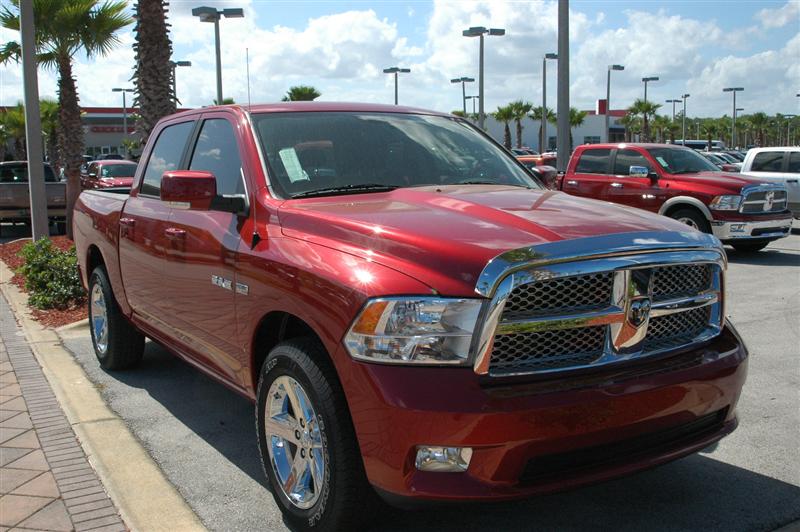
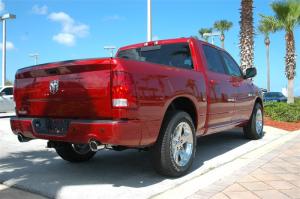
2009 Dodge Ram 1500

Dodge Ram truck sales are up significantly

was reported in the March 16th edition of Automotive News .  Ram 1500’s share of the full-sized pickup segment rose to 13.5 percent in February from 10.7 percent in January and 8.2 percent in December.  This momentum, general excitement, and life signs were observed  and expressed in the Tribune’s recent acticle on the Dodge Ram.


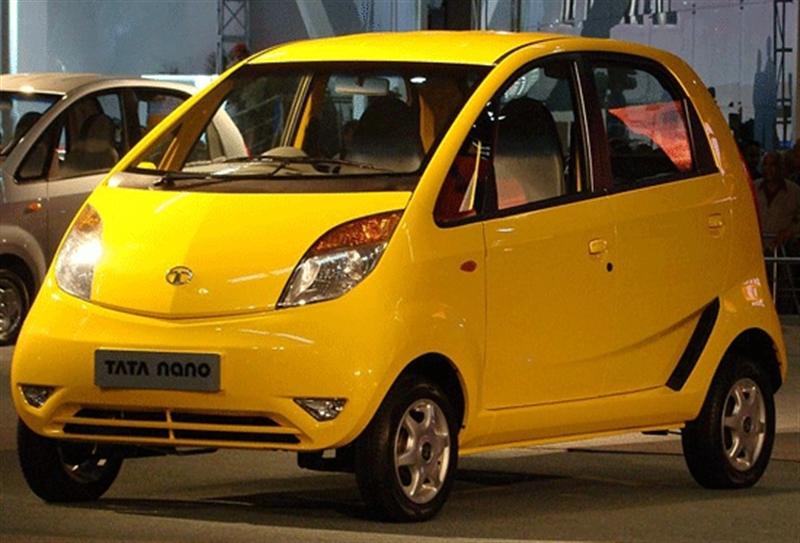
Tata Nano

Tata Nano to start production

was an article in today’s Wall Street Journal .  It is reported that the 10.2′ foot long car will cost dealers just under $2,000.  This car has been in limited availability in India because the new almost-completed production facility had to be relocated because of violent problems with a political party and local residents over disputed land.  During a business trip to Paris in late 2008 I discussed the Nano with an executive from India.  You will find the Tata Nano official website of interest as it countsdown till Monday’s official launch.  There are absolutely no plans for the Nano to come to North America!  This car represents a focused effort to provide a very low cost global entry vehicle for developing nations.


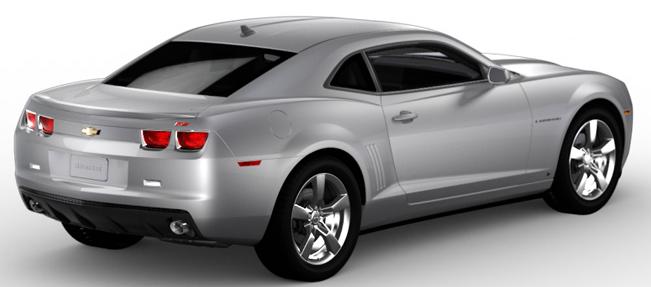
2010 Camaro RS2010 Camaro went into produciton on March 16th

You will be able to see the arrival of the Camaro at your local Chevrolet dealer in April.  Currently, GM reports that they have 14,000 vehicles on order.  Here is the link to the All New Camaro web site.   A base car in LS trim with IRS and a 304 HP V6 has a starting price of $22,995.  However, after spending some time with the Build Your Own feature, the Tribune is of the opinion that the full featured 2LT which comes in around $30k with the RS package will be the sales leader.  A fully optioned 2SS with either of the big ticket tire & wheel packages ($4,680 or $4,865) brings the total to just short of $42k for the 426 HP V8.

Professional Driver Training in 1977

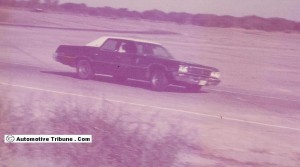
On The One Mile Track - Click For Full Size

On The One Mile Track – Click For Full Size

If you want to be a good driver then you should take a high performance driver training class.  A Google search turned up 683,000 listings for “high performance driving school”  with some focused results such as The Ultimate High-Performance Driving School Buyer’s Guide which lists more than 60 high performance driving schools in 180 locations.  One of the longest running and most respected programs is the Bondurant school, and I’ll come back to them later in the article.

I have always felt that if you really wanted to get good at something then you should teach it.  If you are going to hold yourself out as an instructor then you need to be good and in the process of going to the higher level of proficiency then you will have acquired a life long skill that is truly unique.
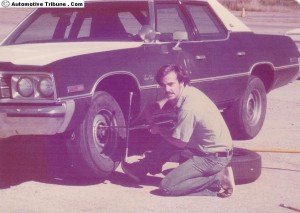
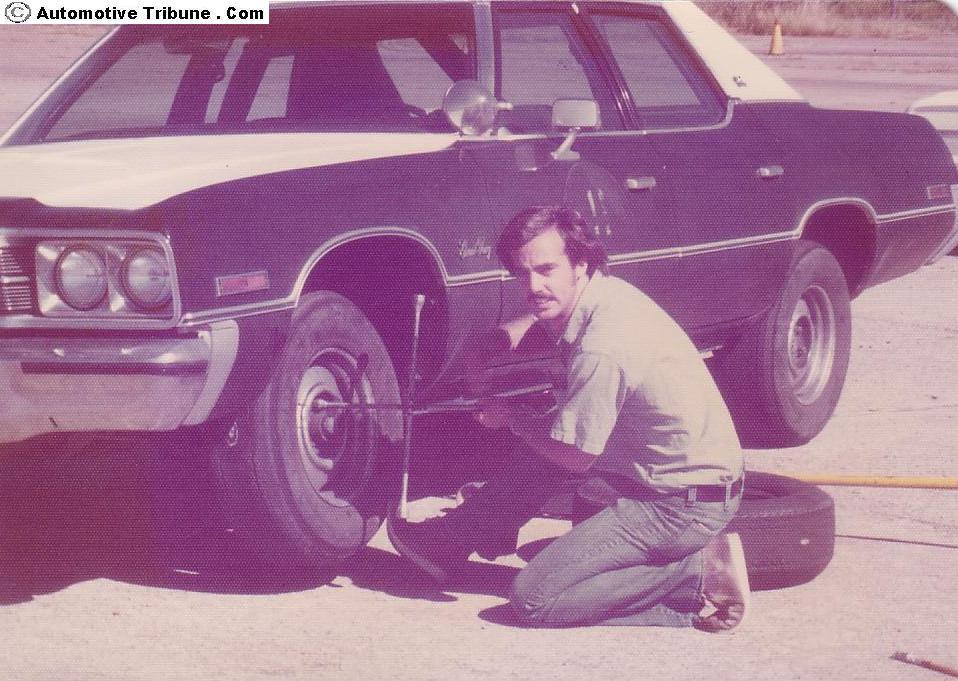
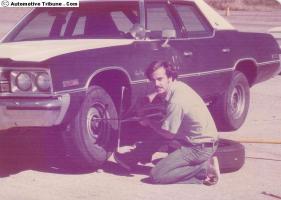
Dan Daneff changes tire with a bald spot.

Dan Daneff in action. A set of tires would not last a week.

In the summer of 1977 I was a graduate student at Texas A&M University.   Having completed all required course work I had only to finish my doctoral dissertation to complete the Ph.D. degree.  Completion of the dissertation took two more years but that is another story in and of itself.  A friend, fellow graduate student, and newly minted Ph.D., Dr. Mark Edwards was aware that I was a very successful driver with the Texas A&M Sports Car Club since my arrival at the University in the fall of 1974.  That success was based on 8years autocrossing experience including the Penn State Sports Car Club, Sports Car Club of America, National Council of Corvette Clubs, Southeastern Confederacy of Corvette Clubs, and some time spent with the 1970 Formula Vee World Champion Bill Scott at Summit Point Raceway, WV working toward an IMSA license.

Along with fellow colleague Quinn Brackett, Ph.D., Mark had been responsible for getting the High Performance Driver Training Program or HPD up and running with Texas Transportation Institute (TTI), a division of the Texas A&M University System.  Both Mark and Quinn had finished their degrees and it was time for them to move on from the HPD program and for the change of instructors.   Along with James Locke and Edgar Blackledge, I was recruited for the program.
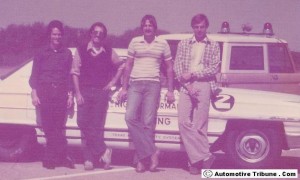
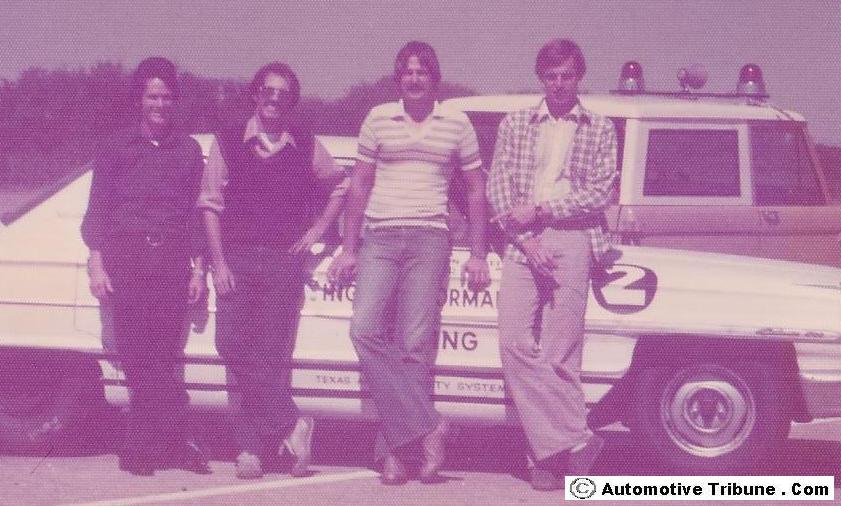
Instructor Staff - left to right: James Locke, Bob McElroy, Ivan Solari, Edgar Blackledge

Instructor Staff – left to right: James Locke, Bob McElroy, Ivan Solari, Edgar Blackledge

HPD was intended to provide Texas law enforcement officers the necessary training to return to their respective departments and train other officers.  The curriculum incorporated elements of Bondurant, LAPD, in addition to selected maneuvers that were determined to be relevant to our specific student population.  This was a 32 hour class that started at noon on Monday and ran through noon Friday.

A once in a lifetime job would be the way to refer to the program.  It was high adrenaline and high risk.  HPD facilities were at the Annex, which was a de-commisioned world war II airbase that had been turned over to the University for research activities.  Many TTI highway transportation projects continue today at the Annex.
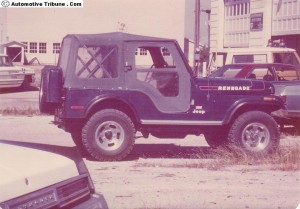
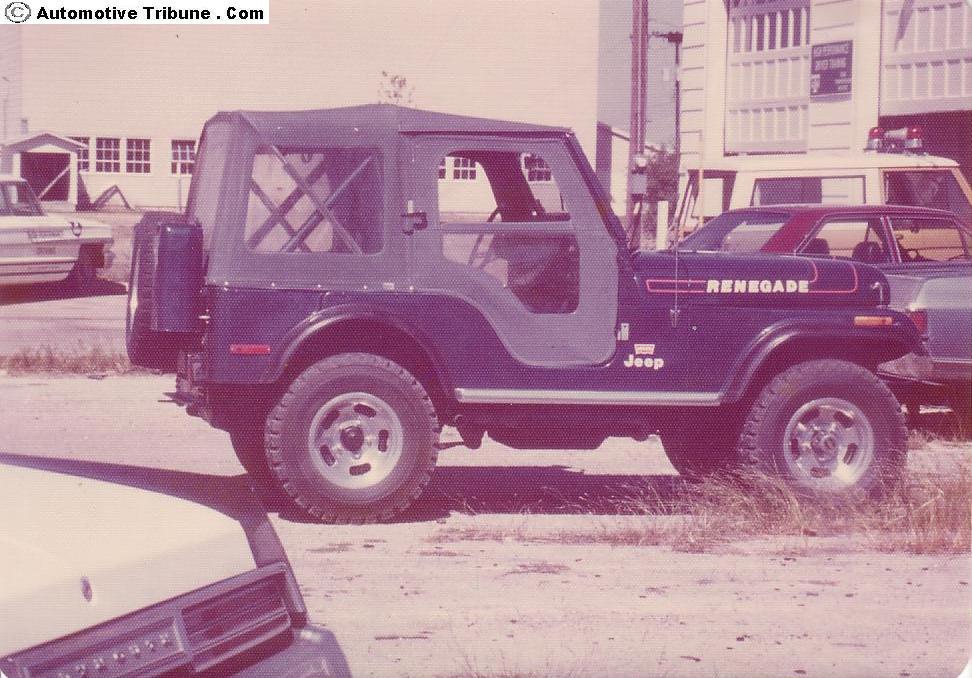
My 304 CI V8 CJ5 at the High Performance Driver Training facility

My 304 CI V8 CJ5 with side exhaust, at the High Performance Driver Training facility

Key training activities include low speed road position, offset alley hazard avoidance, close quarter maneuvering, off road recovery, skid pad, and the one mile track.  Each instructor worked with three students and a set of tires might last a week.  A typical student that came in already had all the answers; they were the law and they knew how to drive.  To acquaint the students on Monday afternoon, after the classroom time, we took them on the 10 cent tour.  After taking the students through the various activities and heading back to our facility at about 60 mph the instructor would illustrate how to perform a set of controlled back-to-back 180 degree turns of the car.  After experiencing a set of driving maneuvers that they had never been through the students would conclude that the fellow behind the wheel knew something that they did not.  This was an essential part of the 10 cent tour.

These are old photos are from 1977.  Each captures  something significant, such as the old Ford skid car with mechanical controls for the instructor to disable front or rear brakes or all – which was typically not a good idea!  The Gran Fury black and white had a 440 under the hood and a close look at the top photo illustrates the challenge of going fast with a big heavy car and the factory police package heavy duty suspension.

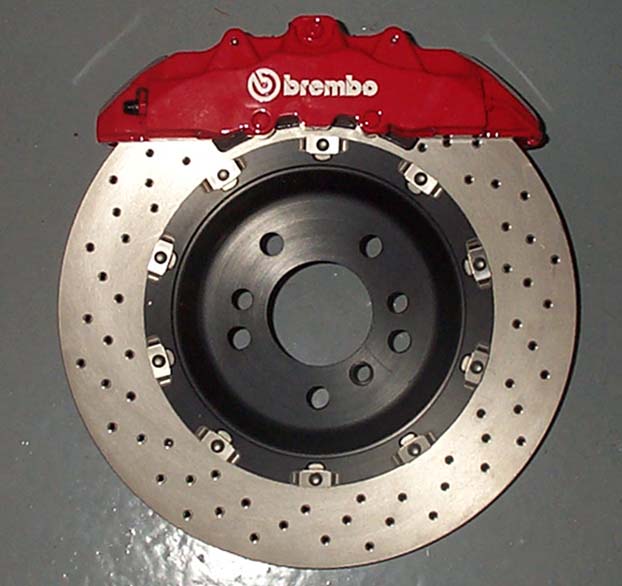
Every week something would happen like snapping an axle flange while the car was going sideways at 60; or watching the sheet metal buckle under your feet while the student driver loses control and impacts an embankment; or a ball of fire erupts under a car because someone put gasoline in a brake fluid can then the brake cylinder seals go away and gasoline sprays onto super hot brake rotors … you get the picture … did I mention that this Hollywood pyrotechnic car was headed straight toward me at major speed when the driver hammered the brakes to slow down producing an instantaneous gasoline explosion and fireball completely visible side-to-side all the way across under the front of the car.  Pretty neat if I say so.  We did implement some changes after this event, like no gasoline in the brake fluid can in our maintenance area.
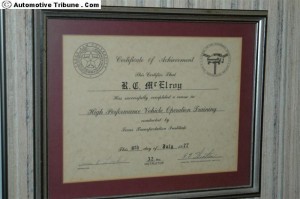
Successul completion of the course entitles you to receive this important certificate.

Successul completion of the course entitles you to receive this important certificate.

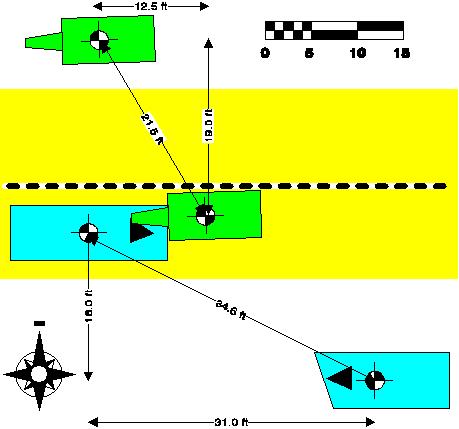
On that axle flange separating, that was on a Ford Torino police package training car.  The car was sideways in a curve at 60.  I immediately felt the separation and tire rolling back through the sheet metal of the fender then the back of the car went violently up as the still vertical tire went under the rear bumper.  I calmly told the student to apply controlled braking.  I did not tell him that the exposed fuel tank (remember this was 1977 and exposed fuel tanks were under the trunk) was now skittering along at 60 mph in very close proximity to the concrete.  After another failure we implemented a preventative maintenance axle change out policy which eliminated these dangerous failures.

We all lived through this once-in-a-lifetime experience.  For everyone involved with the program it was special and unique.  It was geat fun, educational, and memorable.  If you really want to get good at something then teach it!

A Visit to Daytona Dodge Chrysler

2009 Dodge Ram 1500 -- Click Photo For Full Size

2009 Dodge Ram 1500 -- Click Photo For Full Size

Today, I did one of those things that really is a car guy thing, by going to the car dealership and looking around.  Stopping in at Daytona Dodge Chrysler and being shown around by Mr. Straiten.

For hard core Chrysler Product fans the term Mopar is about as close to the core as you get because of Motor Parts Corporation or Dodge/Chrysler parts division.  All future references to Mopar in the Automotive Tribune will be addressed with the full respect and homage associated with the rights, honors, and privileges thereto appertaining.
… Continue Reading

Happy Birthday Smart Car

Smart Car

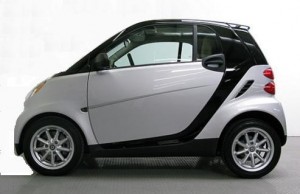
Smart Car

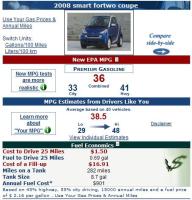
Smart Car has been on sale in the US for one year!  This nifty car was originally introduced at the Paris Motor Show in 1998 developing from initial sketches and design studio efforts in 1993.   Smart production began with the watch people Swatch who ultimately need the cooperation, guidance and capital of Mercedes Benz to bring the project forward to today. 

There are many great photos that show this ultimate small vehicle in all sorts of places that you would not expect.  Smart is about the size of a typical golf car but it can travel with freeway traffic and gets a lot of miles per gallon.  It is also a definite smile statement type of vehicle.  Maybe it is the size, maybe color coordination between body panels and safety frame, or maybe a statement about being concerned for environment and society. … Continue Reading

Drive-In Church — Established 1953

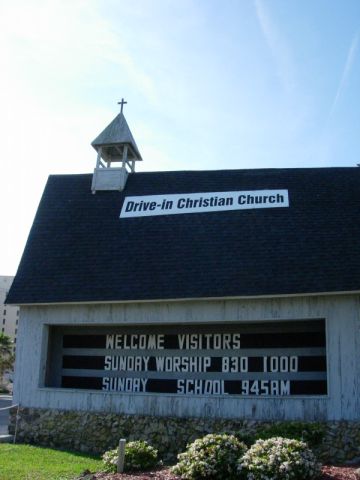
South Atlantic Avenue Entry To Church

South Atlantic Avenue Entry To Church

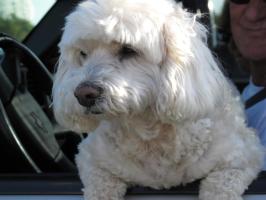
Directly across from the Atlantic Ocean on A1A in Daytona Beach, Florida is the Drive In Christian Church that was established on the site of the Neptune Drive-In Theater in 1953.  Did you ever want to go to church in a peaceful manner where you could just sit in your car and listen to the broadcast on low-power FM, drink coffee or water, and bring your dog too?  The congregation at the Drive-In Christian Church enjoys these weekly services led by minister Rev. Larry Deitch.
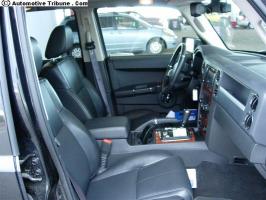
My wife and I have been attending these services for a couple of years.  Typically about 700 people come every week.  Morning weather is normally great in Daytona Beach.  Attending the 8:30 service we like to get situated in the first couple of rows.  The minister stands on the protected balcony at the altar building.  He is up high so everyone can see and if it is real sunny he will wear sun glasses.
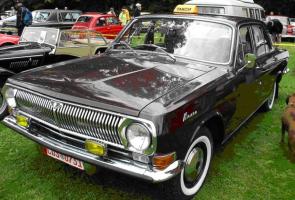
In some ways the Drive-In Christian Church is traditional and in some ways not so traditional.  Bring your dog and everyone is welcome.  When the Deacons pick up the offering, they also provide dog bones to the pups in attendance.  Between services going into fellowship hall, converted from the original snack bar, gives you a chance to have donuts & coffee and chat with others. … Continue Reading

2 Door, 6 Cylinder, 200 MPH Coupe

March 13, 2009 Everything Else 2 Comments
2 Door, 6 Cylinder Coupe

2 Door, 6 Cylinder Coupe

2 Door, 6 Cylinder, 200 MPH Coupe —

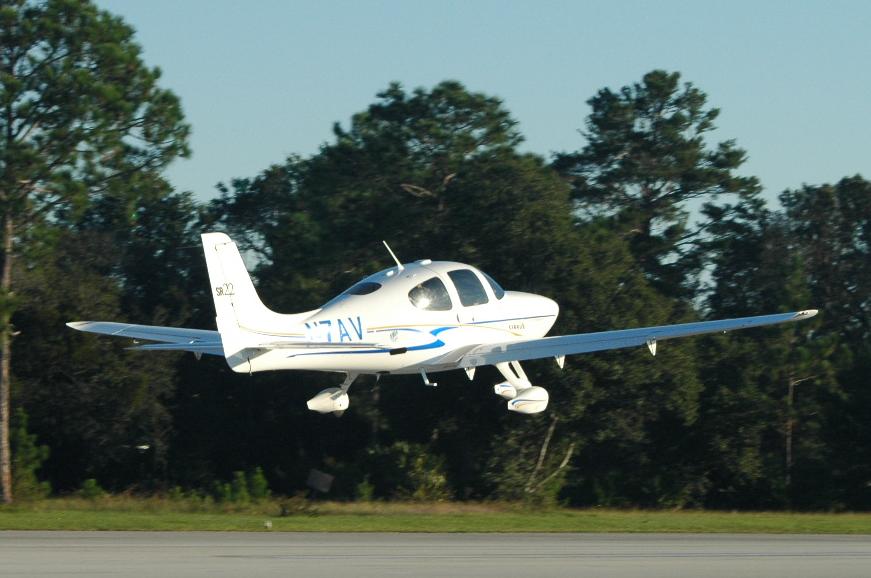
those represent some really great words to a car guy!  When the car guy thinks this through they would certainly come up with candidates.  As you have already noticed from the graphics I am talking about a 2 door, 550 cubic inch, 310 horsepower, mechanically fuel injected, 4-passenger personal airplane which will fly a thousand miles at 200 mph.

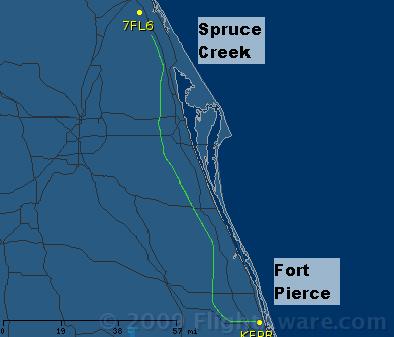
From a mechanical and operational standpoint, there are many features of an airplane that are similar to a car including tires, brakes, oil, fuel, ignition switch, and rules of the road … maybe we need to make that rules of air traffic control & airspace.   Today I had a flight from Spruce Creek to Fort Pierce, a straight line distance of 102 nautical miles x 1.15 = 117.3 statute miles.  Flight time was 45 minutes which means we averaged 156 mph for the straight line.  However, looking at the chart below the flight track was not a straight line which adds time and distance.

Flight track Spruce Creek to Fort Pierce

Flight track Spruce Creek to Fort Pierce

In the post 9/11 world, flying where you are not supposed to be will likely result in A) getting in trouble with ATC, B) an encounter with a n F-15 or similar heavily armed piece of governmental flying hardware with a pilot that has no humor or C) being shot down.  Additionally airspace in Florida is complex / unique / and maybe confusing, add in Space Ships and Disney and you start to get the picture.

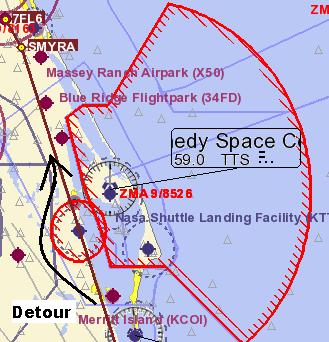
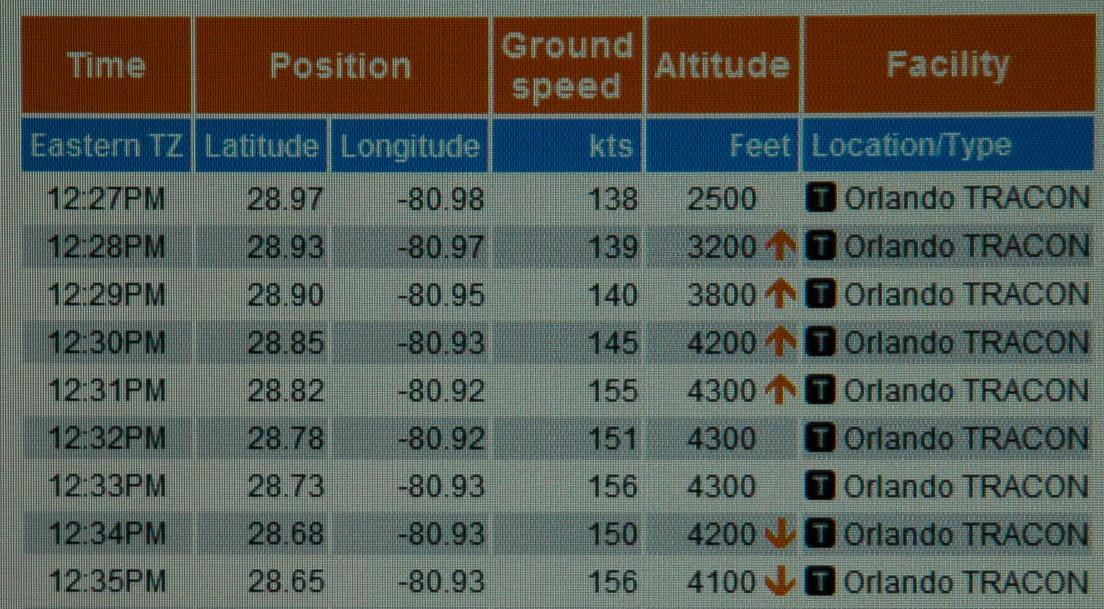
Today’s flight had special airspace restrictions in place because of an airshow and the restricted airspace at the airport, which overlapped into the restricted airspace of Cape Kennedy which is gearing up for a Shuttle Launch.  Going down we flew IFR or Instrument Flight Rules which meant that we filed an IFR Flight Plan that said where we were going to go and then Aircraft Traffic Control (ATC) told us where to go.  Our filed flight plan was pretty direct.  However, with the red restricted areas then our actual track was not very direct.  Also there is a chart showing 9 minutes of the trip with time, position, ground speed, altitude, and ATC facility.

Detour west to avoid the red lines but remain below Orlando air space above us starting at 6000 feet.

Detour west to avoid the red lines but remain below Orlando air space above us starting at 6000 feet.

Going down there was fair amount of flying through clouds and the bumpiness associated with flying through Florida clouds at this time of year.  For the trip back I decided to apply Visual Flight Rules or VFR which means that, using the appropriate VFR rules and regulations, that you stay out of the clouds and you stay out of airspace where you should not be.  A map shows how we deviated to the west around the aforementioned red lines.

You can see that the actual trip mileage was greater than the  planned mileage.  Our speed data shows that after climb out to around 4,000 feet that our speed increased to 156 knots x 1.15 = 179.4 mph.  That is not too bad considering the fact that ATC was sending us through the clouds and I did not want to shake up either the passengers or the pilot.

Our aircraft today was the very popular Cirrus Design SR-22 which was used to make the trip in a safe, reasonably quick, and comfortable way.  Reflecting on the trip today reminds me of the old saying about enjoy the journey.

IFR flight record departing Spruce Creek to Fort Pierce

IFR flight record departing Spruce Creek to Fort Pierce

Maps, charts, and data generated from the flight may be new to the Tribune audience.  However, when you understand the rules of the air, pilots call this ground school which you have to pass, then you are prepared to move forward to operation of the plane.  In the aviation environment your important steps are 1) aviate = fly the plane, 2) navigate = go to the right place, 3) communicate =talk intelligently to ATC.

If you had an opportunity to hear the ATC recordings of Captain Sully that landed the Aribus in the Hudson River, he communicates with total calm.  That is the mark of a professional.  In the automotive world it is the same as keeping your cool during a difficult or dangerous time.  You can get scared later but during the event it is time to maintain control of the vehicle.